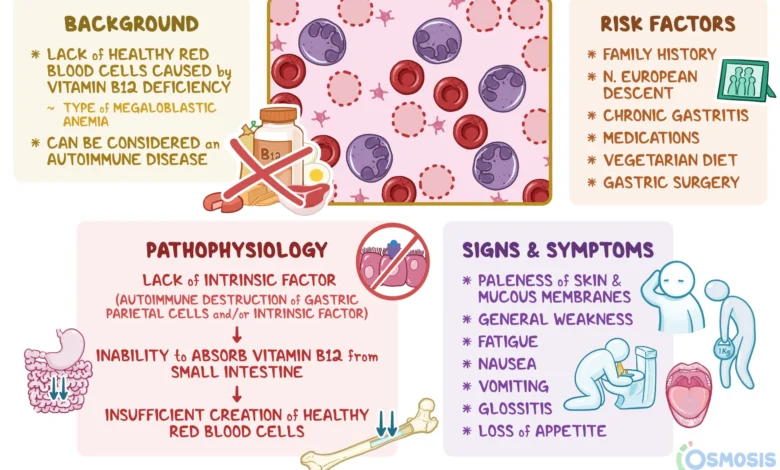
Pernicious anemia symptoms often develop gradually, making the condition difficult to recognise in its early stages. Many people dismiss the initial signs as everyday tiredness, stress, or ageing, which can delay diagnosis. This autoimmune condition prevents the body from absorbing vitamin B12 properly, leading to reduced red blood cell production and impaired nerve function over time.


In the UK, awareness of pernicious anaemia is improving, but many individuals still live with symptoms for years before receiving appropriate treatment. Understanding how the condition presents itself is essential because early intervention can prevent permanent nerve damage and significantly improve long-term health outcomes.
Pernicious Anemia Symptoms Caused by Vitamin B12 Deficiency
Vitamin B12 deficiency lies at the heart of pernicious anaemia and directly causes many of the physical symptoms people experience. Without adequate B12, the body cannot produce healthy red blood cells, resulting in reduced oxygen delivery to tissues. This commonly leads to persistent fatigue, weakness, dizziness, and shortness of breath during routine activities.
Over time, the deficiency worsens, and symptoms may intensify. Individuals may notice pale or slightly yellow skin, heart palpitations, headaches, and difficulty concentrating. These pernicious anemia symptoms are often mistaken for iron deficiency or chronic stress, which is why blood testing is crucial for accurate diagnosis within NHS healthcare pathways.
Pernicious Anemia Symptoms Affecting the Nervous System
Neurological complications are among the most serious pernicious anemia symptoms and should never be ignored. Vitamin B12 plays a vital role in maintaining the protective covering of nerves. When levels remain low for extended periods, nerve signals become disrupted, leading to tingling, numbness, or a pins-and-needles sensation, particularly in the hands and feet.
As nerve damage progresses, balance problems, muscle weakness, and difficulty walking may develop. Some individuals also experience memory issues, confusion, depression, or personality changes. These neurological symptoms can become irreversible if treatment is delayed, highlighting why early recognition is strongly emphasised by UK medical professionals.
Pernicious Anemia Symptoms Involving the Digestive System and Mouth

The digestive tract is closely linked to pernicious anaemia because the condition originates in the stomach. Many people experience digestive disturbances such as nausea, bloating, constipation, diarrhoea, or a reduced appetite. These symptoms can contribute to unintended weight loss and further nutritional deficiencies if left unmanaged.
Oral symptoms are particularly distinctive and can provide early diagnostic clues. A sore, swollen, smooth red tongue, known as glossitis, is commonly reported. Some individuals also develop mouth ulcers or changes in taste. These pernicious anemia symptoms are frequently overlooked but are important indicators of underlying vitamin B12 deficiency.
Pernicious Anemia Symptoms in Adults, Women, and Children
In adults, pernicious anemia symptoms often appear gradually and may be attributed to busy lifestyles or ageing. Chronic tiredness, mental fog, and reduced physical stamina are common complaints. Older adults are particularly at risk of delayed diagnosis, which increases the likelihood of neurological complications developing before treatment begins.
Women may experience additional symptoms such as hair thinning, menstrual irregularities, and heightened fatigue during pregnancy or after childbirth. Although rare, children can also develop pernicious anaemia. In younger patients, symptoms may include poor growth, developmental delays, behavioural changes, and learning difficulties that require prompt medical evaluation.
Severe Pernicious Anemia Symptoms and When to Seek Medical Advice
Severe pernicious anemia symptoms usually occur when the condition remains untreated for a long time. At this stage, individuals may experience extreme breathlessness, chest discomfort, vision disturbances, unsteady movement, and significant cognitive decline. These symptoms can severely affect quality of life and independence if not addressed urgently.
Anyone experiencing ongoing fatigue combined with neurological changes, tongue pain, or digestive problems should seek medical advice without delay. In the UK, GPs can arrange blood tests to confirm vitamin B12 deficiency and autoimmune markers. Early treatment can halt progression and reverse many symptoms.
Pernicious Anemia Symptoms and Long-Term Treatment Outcomes
Treatment for pernicious anaemia focuses on restoring and maintaining healthy vitamin B12 levels, usually through regular injections. Many people notice improvements in energy, concentration, and neurological symptoms within weeks of starting treatment, although full recovery may take longer depending on severity.
Most individuals require lifelong treatment, as the underlying absorption problem cannot be corrected. With consistent care and monitoring, pernicious anemia symptoms can be effectively controlled, allowing people to live full, active lives. Ongoing awareness and adherence to treatment are key to preventing symptom recurrence.
Conclusion on Pernicious Anemia Symptoms and Early Recognition
Pernicious anaemia is a serious but manageable condition when diagnosed early. Because pernicious anemia symptoms can affect multiple systems in the body, they are often misunderstood or overlooked. Increased awareness of early warning signs, particularly neurological and oral symptoms, plays a vital role in timely diagnosis.
With proper treatment and long-term management, outcomes are highly positive. Anyone experiencing persistent, unexplained symptoms should consult a healthcare professional, as early intervention can prevent irreversible complications and significantly improve overall wellbeing.