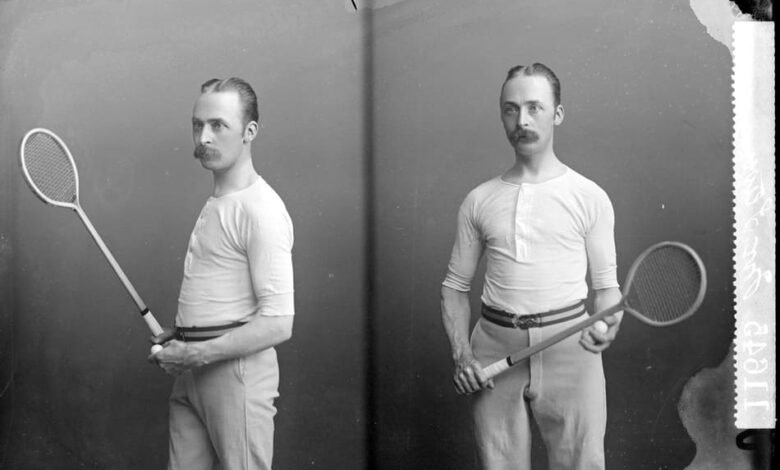
The question of when was squash invented is more than a simple historical query. It opens the door to understanding how sports evolve through experimentation, culture, and necessity. Squash did not appear overnight with fixed rules and courts. Instead, it developed gradually in England during a period when physical education and organised sport were becoming essential parts of British school life.


Understanding when was squash invented also helps explain why the game feels so distinctive today. Its enclosed court, fast pace, and emphasis on skill rather than brute strength reflect the conditions in which it emerged. Squash is deeply connected to British sporting traditions, and its origins continue to influence how the game is played and appreciated around the world.
When Was Squash Invented in Historical England
To answer when was squash invented, historians generally point to the early 1830s in England. This was a time when British public schools encouraged physical activity as part of character building. Students often adapted existing games to suit available spaces, leading to creative variations that sometimes developed into entirely new sports.
Rather than being officially invented by one individual, squash evolved through repeated informal play. Pupils experimented with equipment and rules, gradually shaping a new game. This organic development explains why squash lacks a single founding moment but instead has a well-documented period of early growth rooted in nineteenth-century England.
The Origins of Squash and the Influence of Rackets
The origins of squash are closely linked to the older and more physically demanding game of rackets. Rackets was played with a hard ball in enclosed courts and required significant strength. Over time, players began using softer or damaged balls, which behaved differently when struck against the wall, creating longer rallies and more varied shot options.
This change in ball behaviour marked a turning point. The softer ball flattened on impact, allowing players to control shots more precisely. This innovation transformed the experience of play and laid the foundation for squash as a separate sport. The name itself reflects this defining characteristic of the ball’s movement.
Harrow School and the Birthplace of Squash

Harrow School is widely accepted as the birthplace of squash. During the 1830s, students at Harrow adapted the game of rackets to suit smaller courts and softer balls. These matches became increasingly popular because they required speed, agility, and tactical thinking rather than sheer power.
As interest grew, Harrow School constructed the first dedicated squash courts in the 1860s. This development was crucial, as it provided a consistent playing environment and encouraged the creation of shared rules. Harrow’s role is central to discussions about when was squash invented and remains a key part of the sport’s identity.
How Squash Developed Into an Organised Sport
Following its early success in schools, squash gradually spread to clubs and private facilities across England. Purpose-built courts became more common, and players began to agree on basic rules regarding scoring, serving, and court dimensions. This period marked the transition from casual recreation to organised competition.
By the early twentieth century, formal squash associations were established to govern the sport. These organisations standardised equipment and gameplay, allowing competitive matches to take place across different regions. This structured approach helped squash gain legitimacy and prepared it for national and international growth.
When Was Squash Invented and Its Expansion Beyond England
Although squash originated in England, its appeal quickly crossed borders. British teachers, soldiers, and expatriates introduced the game to North America, particularly Canada and the United States, during the late nineteenth century. The first North American squash courts appeared in the 1880s.
This international spread reinforced interest in when was squash invented, as different countries adapted the game to their own sporting cultures. Despite regional variations, the core principles of squash remained intact, ensuring that its English origins continued to influence the sport’s global identity.
Key Milestones in the History of Squash
Several milestones shaped the modern game of squash. The construction of dedicated courts in the nineteenth century allowed consistent play, while the introduction of standard rules in the 1920s ensured fairness and uniformity. Major tournaments soon followed, raising the sport’s competitive profile.
The establishment of professional championships and international federations further strengthened squash’s position. These milestones highlight how a school-based experiment became a globally recognised sport. Each stage of development adds depth to the story of when was squash invented and how it evolved over time.
Squash in the Modern Sporting World
Today, squash is played in over 180 countries and is valued for its intensity, fitness benefits, and tactical depth. Modern courts, equipment, and training methods reflect decades of refinement. Professional players compete at the highest level, showcasing the sport’s athletic demands and strategic complexity.
In the United Kingdom, squash continues to thrive at both grassroots and elite levels. Clubs, schools, and leisure centres play a vital role in maintaining participation. The sport’s enduring popularity demonstrates how its historical roots remain relevant in a contemporary sporting landscape.
Conclusion on When Was Squash Invented
In conclusion, when was squash invented can be traced back to the 1830s in England, where innovation and necessity combined to create a new game. From its early days at Harrow School to its global reach today, squash has followed a remarkable path of development.
The story of squash highlights the power of experimentation and tradition working together. Understanding when was squash invented not only answers a historical question but also reveals why the sport continues to captivate players and audiences across generations.